 Meet Susan!
She started a new job as an accountant but soon realized that she had a huge skills gap. The position required critical skills she hadn't yet developed, such as conflict resolution when dealing with disagreements with coworkers and clients.
If you end up in a similar situation and want to build skills at work, don't panic!
With just a few steps, can create a roadmap to bridge the skills gap in your job and be confident in your new position.
Identify Your Skills Gap

In an era of rapidly changing work practices, bridging skills gaps is essential to ensure effective results.
Two effective ways to identify your skills gap are:
Self-reflection: Compare the needs of the role to your current skills, and then write a list of the gaps from most to least important in terms of your performance.
Seek feedback: If you don't immediately recognize which skill you're lacking but feel you're falling behind or struggling to keep up with demands, you can ask a manager or colleague for feedback.
 Hard Skills
Hard skills are technical, knowledge-driven skills acquired through formal education.
Examples
Susan, the accountant from our scenario, needs to develop hard skills like:
Preparing income statements and balance sheets
Filing federal and state tax returns
Using tools like QuickBooks, SAP, or Oracle for bookkeeping
Running reports in ERP systems
 Soft Skills
Soft skills are interpersonal, subjective abilities that directly affect how you deliver your work results and establish work relationships.
Examples
Teamwork
Time management
Communication
Critical thinking
Set SMART Learning Goals
It's time to address your skills gap it by translating it into a specific, measurable learning objective.
An effective way to set career learning goals is by using the SMART framework.
SMART goals (Specific, Measurable, Achievable, Relevant, and Time-bound) give professionals a clear framework for turning ambitions into actionable plans.
SMART goals help you overcome your skills gap by:
Breaking ambitions into manageable steps
Building confidence
Keeping you focused
Tracking your progress

Susan's Skills Gap SMART GOALS
Let's see how Susan can apply the SMART framework to bridge her skill gap.
After starting her new accounting job, Susan realized she's slow at using Excel. That's very stressful, as her team relies on it daily for financial reports.
Her SMART goals are:
Specific: Complete an intermediate Excel course covering VLOOKUP, pivot tables, and IF formulas.
Measurable: Finish all modules and build a practice spreadsheet using each skill.
Achievable: Dedicate 30 minutes daily before or after work.
Relevant: Excel is essential to her team and will directly improve her work quality.
Time-bound: Complete it within 6 weeks.
By week 6, Susan will be able to use pivot tables to sort expense data in minutes, management will notice and praise her, and she'll feel more confident contributing to the team.
Quiz Time!
Susan realized she struggles with reconciling accounts, a task her team does every month. She considers solutions like the following:
A. "I will get better at reconciling accounts as soon as possible."
B. "I will complete an online reconciliation course and independently reconcile two accounts with no errors by the end of my second month."
C. "I will watch accounting videos online, review my notes from training, and practice reconciliation techniques whenever I have spare time at work."
D. "I will ask my manager for help when I get stuck on reconciliations, attend team meetings, and gradually build my confidence over time."
Quiz
Which of the above is the best SMART goal to help her address this skill gap?
Understand Short-term & Long-term Goals
Susan's Excel scenario is an example of a short-term goal.
Short-term Goals
Achievable within 30–90 days
Skills gap example: Learning to run the most common reports in the company's accounting software within the first 30 days
Long-term Goals
Take 6–12 months or even years
Skills gap example: Moving into a senior accountant role within 3 years by consistently delivering accurate work and taking on more responsibility

How to Craft Short and Long-Term Goals
List your short-term goals first. Identify 2–3 things you want to achieve in the next 30–90 days that move you toward your bigger goal.
Define your long-term destination. Where do you want to be in 1–3 years? Use that as your endpoint and work backward.
Connect the dots. Aim for your short-term goal to build toward your long-term one.
Set a deadline for each goal. Vague timelines lead to inaction. Every goal needs a target date.
Review and adjust. Check what's on track and what's slipped, and adjust as needed.
Use this free career roadmap Notion template to get started!
Align Your Goals with Your Team & Company

Setting learning goals to address your skills gap works best when these goals connect to what your team and company actually need.
Take time early on to understand what your team prioritizes and where you could help fill gaps, so your growth benefits everyone around you.
Use these strategies to understand what matters most to your team:
Ask directly. Talk to your manager early about what success looks like and what the team values.
Observe what gets attention. Notice what comes up repeatedly in meetings and what your manager follows up on.
Read between the lines. Look at how time and recognition are allocated; that reflects real priorities.
Once you know which skills you want to build, talk to your manager about them early.
They can point you toward what matters most right now and are more likely to give you opportunities to practice those skills on the job.
Build Your Learning Roadmap
 1. Identify Internal and External Resources
Before looking for help with your skills gap, start with what's already around you.
Team members can answer day-to-day questions and share shortcuts they've learned on the job.
Stay informed to catch opportunities like:
Training programs
Free software licenses
Learning budgets
Free online courses
 2. Choose the Right Learning Methods
Not every learning method works the same way for every skill, so be intentional about how you learn.
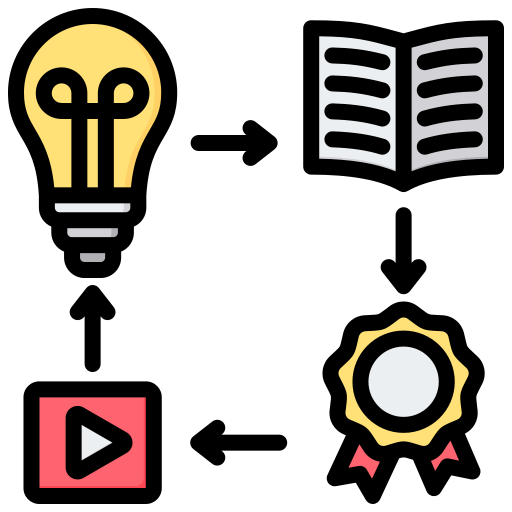
Online courses: Learn technical skills at your own pace. Consider free learning platforms like Alison and Coursera.
Mentorship: Get guidance from someone with real experience.
On-the-job practice: Apply skills through real tasks.
Shadowing: Watch a senior colleague in action to see how things actually work.
 3. Create a Realistic Timeline with Milestones
Once you know which skills you need to build, map out a simple timeline with small checkpoints along the way.
This keeps you on track, helps you spot when you're falling behind, and gives you regular moments to celebrate your progress as you overcome your skills gap.
 4. Balance Learning with Daily Responsibilities
Learning on the job doesn't mean sacrificing your current workload.
Set aside dedicated time for learning. Even 20 to 30 minutes a day adds up quickly over weeks and months.
The idea is to aim for consistent progress without burning out or falling behind on your main responsibilities.
 5. Track Progress & Adapt
Schedule regular self-assessments and manager check-ins to celebrate wins and address challenges early.
Acknowledge every milestone to stay motivated.
If a learning method isn't working, try a different approach.
Revisit your roadmap regularly so it stays relevant as your role evolves.
Quiz Time!
Susan sets a skills gap goal to master financial reporting in 90 days, but has no milestones in between. At day 75, she realizes she's far behind.
Which of the strategies below will help her address this issue for her next goal?
A. Set a longer timeline to avoid falling behind.
B. Wait for her manager to schedule check-ins.
C. Break the 90-day goal into smaller milestones, like completing one report type every two weeks, to catch delays early.
D. Focus on financial reporting only after mastering all other skills first.
Quiz
Choose the best strategy for Susan:
Take Action
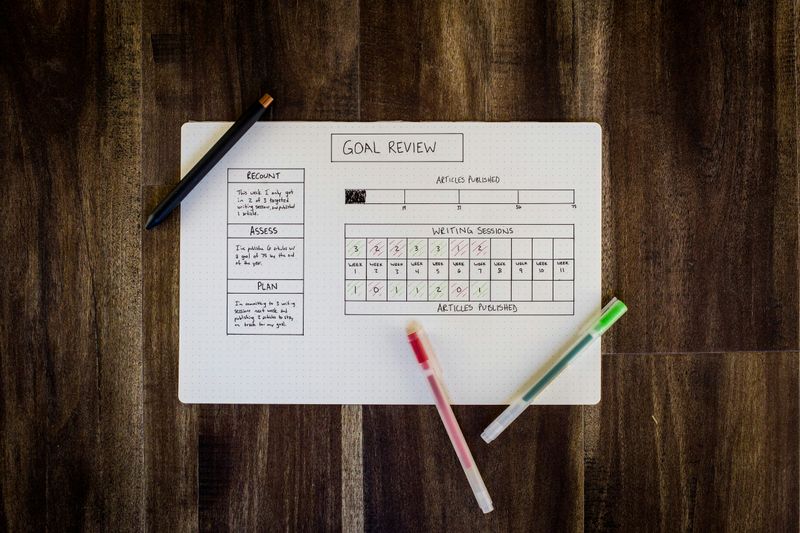 Photo by Isaac Smith on Unsplash
Your career skills roadmap is only as powerful as the actions you take. Start today, even if it's just one small step towards overcoming your skills gap.
Keep improving:
Your feedback matters to us.
This Byte helped me better understand the topic.