
Think of a giant social media platform like Instagram or TikTok. It's an interconnected information flow system.
What would happen if one connection (for example, a popular influencer's account) is cut off from the system? It would definitely affect the flow of information across the platform.
 You can picture energy flow through our ecosystem in a similar way.
In nature, even small shifts — such as removing just one species — can disrupt the flow of energy throughout the entire system.
An energy pyramid makes it easier to see and understand the way energy travels along a food chain.
Energy and Ecosystems
If a pond dries up after months without rain, its fish, plants, and other organisms die because they all depend on one another. This interconnectedness defines an ecosystem.
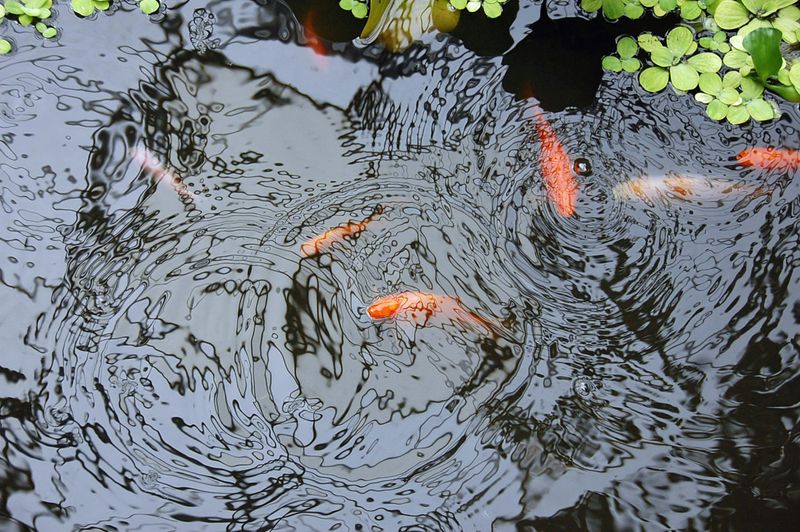 Photo by Maja R. on Unsplash
An ecosystem is made up of animals, plants, weather conditions, and terrain, all interacting to create a vibrant environment for life.
It consists of both biotic (living) and abiotic (nonliving) components.
Energy within an ecosystem is constantly on the move — it doesn’t remain with a single organism but continues to move form one organism to the other.
There is no size limit for ecosystems. They can be huge tropical rainforests or tiny environments like a raindrop, puddle, or even the surface of a rock.
Whenever living organisms interact with their surroundings to transfer energy and nutrients, it counts as an ecosystem.
Food Chains and Food webs
Food Chains
A food chain shows the linear pathway of how energy and nutrients move from one organism to another through eating in an ecosystem.
Take a look at this simple food chain:
 Image created by author via Canva.
Food Webs
In an ecosystem, there are many complex interactions between organisms, creating a complex flow of energy through different pathways.
This can be represented using a food web. A food web maps how organisms are related to one another — taking into account which animals are eaten by others.
Check out this video on the food chains and food web for more:
Trophic Levels
In a food chain, each organism occupies a different trophic or nutritional level: its position in a food chain, based on what it eats and where it gets its energy.
First trophic level: primary producers that make their own food using the energy of the sun (phototrophs) or chemical processes (chemotrophs).
Second trophic level: primary consumers, or animals that eat primary producers (herbivores like deer, rabbits, and caterpillars).
Third trophic level: secondary consumers that eat primary consumers (carnivores like foxes, frogs, and small birds that eat insects).
Fourth trophic level: tertiary consumers that eat secondary consumers (carnivores that eat other carnivores, like snakes, hawks, and owls).
Fifth trophic level: some food chains have quaternary consumers or apex predators (animals that eat tertiary consumers like wolves, eagles, and mountain lions).
In the picture below, you also see decomposers. Known as nature's recyclers, these are organisms — such as bacteria, fungi, worms, and insects — that break down dead plants, animals, and waste products into simpler, inorganic matter.
 Image courtesy of Wildearthlab
Quiz
Which organism can belong to more than one trophic level?
The Energy Pyramid & Energy Flow
Understanding the flow of energy in an ecosystem helps determine:
how ecosystems maintain balance
how they might recover from environmental disruptions
Think about this- Energy in an ecosystem works like a paycheck-you earn it, spend most of it and only a little gets passed on.
An energy pyramid illustrates how energy moves upward through various trophic levels:
 Image courtesy of Wikimedia Commons
However, as we notice in the energy pyramid above, only about 10% of the energy is passed from one level to the next — known as the10% rule.
So what about the remaining 90%? What happens to that energy?

Some of the energy powers bodily functions, while most is released into the atmosphere as heat.
Energy is also lost because:
Not all consumed food/biomass can be digested.Some is eliminated as waste.
A large amount of energy escapes as heat during respiration. Respiration is the process of inhaling oxygen, transporting it to cells for energy production, and exhaling carbon dioxide.
Plants and animals sometimes die without being eaten, so their biomass doesn’t transfer to the next consumer.
Impact of Energy Efficiency on Biodiversity
Energy efficiency has a direct impact on:
how many different species an ecosystem can support
how complex it becomes.
Let's do some math to see how the 10% rule works in this food chain.
 Image created by Smitha Chungath via Canva.
Energy is measured in joules (J) or kilojoules (kJ).
The formula to calculate energy at a trophic level:
energy at next level = energy at previous level x 0.10
In the energy pyramid shown above, if the grass (primary producer) captures 10,000 kJ of energy:
grasshoppers (primary consumers) will receive: E= 10,000 x .10=1000 kJ
mice (secondary consumers) will receive: E= 1000 x .10= 100 kJ
the snake (tertiary consumers) will receive: E= 100 x .10= 10 kJ
Because of this rapid decrease in available energy, ecosystems can only support a limited number of trophic levels.
The video below gives another example to see how the 10% rule can calculate energy levels at different trophic levels:
Test Your Knowledge: Freshwater Energy Pyramid
 A freshwater lake ecosystem includes the following food web:
algae (producers) → zooplankton → small fish → large fish → birds
decomposers break down dead organisms
Recently, farmers near the lake began using more fertilizers. After a few months, scientists observed:
rapid growth of algae (algal bloom)
decrease in oxygen levels in the water
decline in fish populations
If only 10% of energy passes between levels, what happens when fish populations drop?
A. More energy reaches birds.
B. Less energy is available to higher trophic levels.
C. Energy increases in decomposers only.
D. Energy is unaffected.
Quiz
If only 10% of energy passes between levels, what happens when fish populations drop?
Take Action
Simple steps can help you expand your knowledge of the energy pyramid:
Your feedback matters to us.
This Byte helped me better understand the topic.